BACKGROUND:
Kikuchi-Fujimoto disease is a disorder that can mimic lymphoma and present with clinical and histopathological overlap with systemic lupus erythematosus in adolescent patients.
CASE REPORT:
A 15-year-old female patient presented with recurrent upper respiratory tract infections. Concomitantly, she developed morning arthralgia in the bilateral metacarpophalangeal joints and a photosensitive malar rash. Subsequently, she developed persistent intermittent fever, anorexia, joint limitation, and cervical and inguinal lymphadenopathy, associated with normocytic normochromic anemia. Complete blood count revealed leukopenia and progressive anemia. Bone marrow biopsy showed increased cellularity with erythroid hypoplasia and reactive megaloblastic changes. Immunohistochemical staining revealed reactive polyclonal lymphoid hyperplasia. During her hospitalization, oral ulcers, jaundice, a skin rash, and elevated transaminases and direct bilirubin were detected. She developed bilateral pleural effusion, acute respiratory failure, and required mechanical ventilation. Positive antinuclear antibodies were documented: 1:640 (AC-20 pattern), leading to a diagnosis of systemic lupus erythematosus. Treatment was initiated with high-dose corticosteroids, intravenous immunoglobulin, and cyclophosphamide for refractory lupus pneumonitis, with initial clinical improvement. She was transferred to a tertiary care hospital; however, she experienced progressive multisystem deterioration and died despite the treatment.
CONCLUSIONS:
Early recognition of the overlap between Kikuchi-Fujimoto disease and systemic lupus erythematosus is essential to avoid treatment delays and guide the timely prescription of immunosuppression in severe cases. Prolonged clinical surveillance and close follow-up are crucial for the timely detection of complications and to optimize patient prognosis.
ANTECEDENTES:
La enfermedad de Kikuchi-Fujimoto es una alteración que puede simular un linfoma y manifestarse con traslape clínico e histopatológico con lupus eritematoso sistémico en pacientes adolescentes.
REPORTE DE CASO:
Paciente femenina de 15 años, que inició con infecciones recurrentes de vías respiratorias superiores. De manera concomitante, manifestó artralgias matutinas en las articulaciones metacarpofalángicas bilaterales y exantema malar fotosensible. Posteriormente, se agregó fiebre intermitente persistente, anorexia, limitación articular y linfadenopatía cervical e inguinal, asociadas con anemia normocítica normocrómica. La biometría hemática evidenció leucopenia y anemia progresiva. La biopsia de médula ósea mostró celularidad aumentada con hipoplasia eritroide y cambios megaloblásticos reactivos. El estudio de inmunohistoquímica concluyó hiperplasia linfoide policlonal reactiva. Durante su hospitalización aparecieron úlceras orales, ictericia, exantema cutáneo y elevación de transaminasas y bilirrubina directa. Evolucionó con derrame pleural bilateral, insuficiencia respiratoria aguda y requerimiento de ventilación mecánica. Se documentaron anticuerpos antinucleares positivos: 1:640 (patrón AC-20), por lo que se estableció el diagnóstico de lupus eritematoso sistémico. Se inició tratamiento con corticosteroides a dosis altas, inmunoglobulina intravenosa y ciclofosfamida por neumonitis lúpica refractaria, con mejoría clínica inicial. Fue enviada a un hospital de tercer nivel; no obstante, reportó deterioro multisistémico progresivo y falleció pese al tratamiento instaurado.
CONCLUSIONES:
El reconocimiento temprano del traslape de enfermedad de Kikuchi-Fujimoto–lupus eritematoso sistémico es fundamental para evitar retrasos terapéuticos y orientar oportunamente la prescripción de inmunosupresión en casos graves. La vigilancia clínica prolongada y el seguimiento estrecho son decisivos para la detección oportuna de las complicaciones y optimizar el pronóstico de los pacientes.
BACKGROUND
Kikuchi-Fujimoto disease, also known as histiocytic necrotizing lymphadenitis, is a rare disorder described primarily in adolescents and young adults. Clinically, it is characterized by lymphadenopathy, fever, and constitutional symptoms, and is often confused with infectious processes, lymphoma, or other autoimmune diseases due to its nonspecific clinical presentation.1-3
A particularly relevant aspect is its association with systemic lupus erythematosus. Kikuchi-Fujimoto disease may precede, coexist, or develop during the course of systemic lupus erythematosus, and there is significant clinical and histopathological overlap with lupus lymphadenitis, which represents a significant diagnostic challenge.1,19 Both disorders can share paracortical necrosis, absence of neutrophils, and an abundance of histiocytes and plasmacytoid dendritic cells; however, the presence of hematoxylin bodies and the Azzopardi phenomenon favors a diagnosis of systemic lupus erythematosus.4
Correct interpretation of the lymph node biopsy, together with clinical and immunological correlation, is decisive for differentiating between isolated Kikuchi-Fujimoto disease, lupus-associated lymphadenitis, and hematological malignancies, as the therapeutic implications differ substantially. The following is the case of an adolescent with fever, lymphadenopathy, and multisystem deterioration, initially interpreted as lymphoma, in whom an excisional biopsy confirmed Kikuchi-Fujimoto disease and systemic lupus erythematosus was subsequently documented, highlighting the diagnostic and therapeutic challenges of the overlap between Kikuchi-Fujimoto disease and systemic lupus erythematosus.
Case Report
A 15-year-old previously healthy female patient, with a complete vaccination schedule and appropriate weight and height for her age, began in March 2025 with recurrent upper respiratory tract infections treated on an outpatient basis. Concomitantly, she manifested morning arthralgia in bilateral metacarpophalangeal joints, initially treated with nonsteroidal anti-inflammatory drugs, as well as a photosensitive malar rash. In April, she manifested persistent intermittent fever, anorexia, joint limitation, and cervical and inguinal lymphadenopathy, associated with normocytic normochromic anemia. In June 2025, she was evaluated by staff from the Rheumatology service, who prescribed treatment with methotrexate, prednisolone, and hydroxychloroquine due to suspected autoimmune disease.
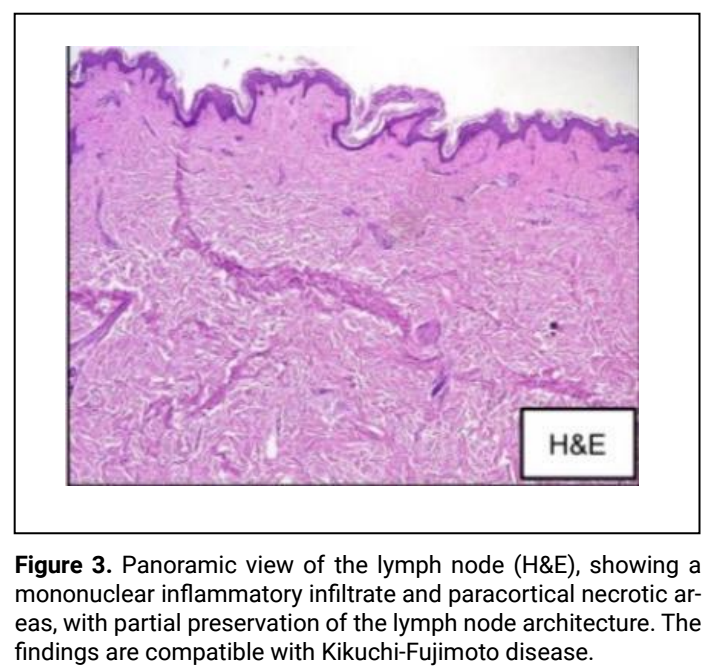
Subsequently, in the context of hospitalization for pneumonia and severe anemia, imaging studies showed bilateral ground-glass pulmonary infiltrates with areas of consolidation, as well as axillary and inguinal lymphadenomegaly. A complete blood count showed leukopenia and progressive anemia. Bone marrow biopsy showed increased cellularity with erythroid hypoplasia and reactive megaloblastic changes. The initial percutaneous lymph node biopsy suggested non-Hodgkin lymphoma; however, the immunohistochemical study concluded reactive polyclonal lymphoid hyperplasia. In July, a general urine examination reported proteinuria and an active urinary sediment (Table 1). Subsequently, an excisional biopsy of a right posterior cervical lymph node was obtained, the histopathological study of which revealed preserved architecture with foci of necrosis and cellular debris, without the presence of Reed-Sternberg cells or malignant atypia, compatible with necrotizing lymphadenitis (Kikuchi-Fujimoto disease). The histological microphotographs were evaluated by a certified pathologist. Figures 1 to 3
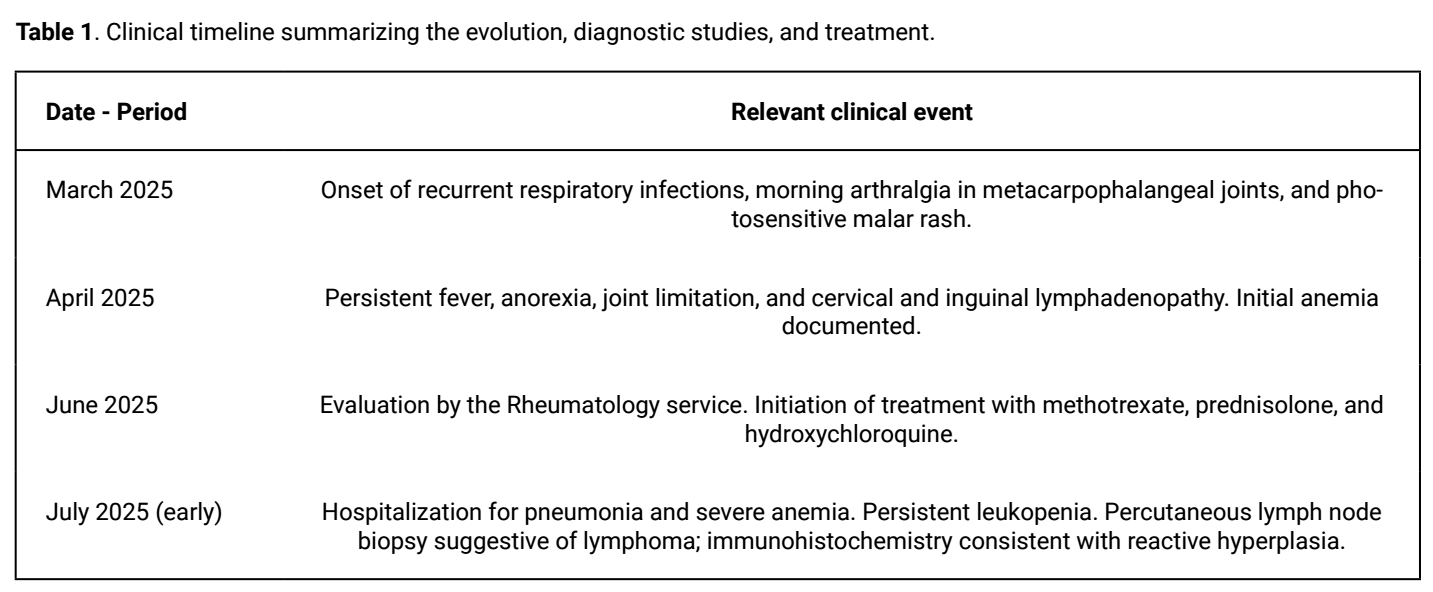
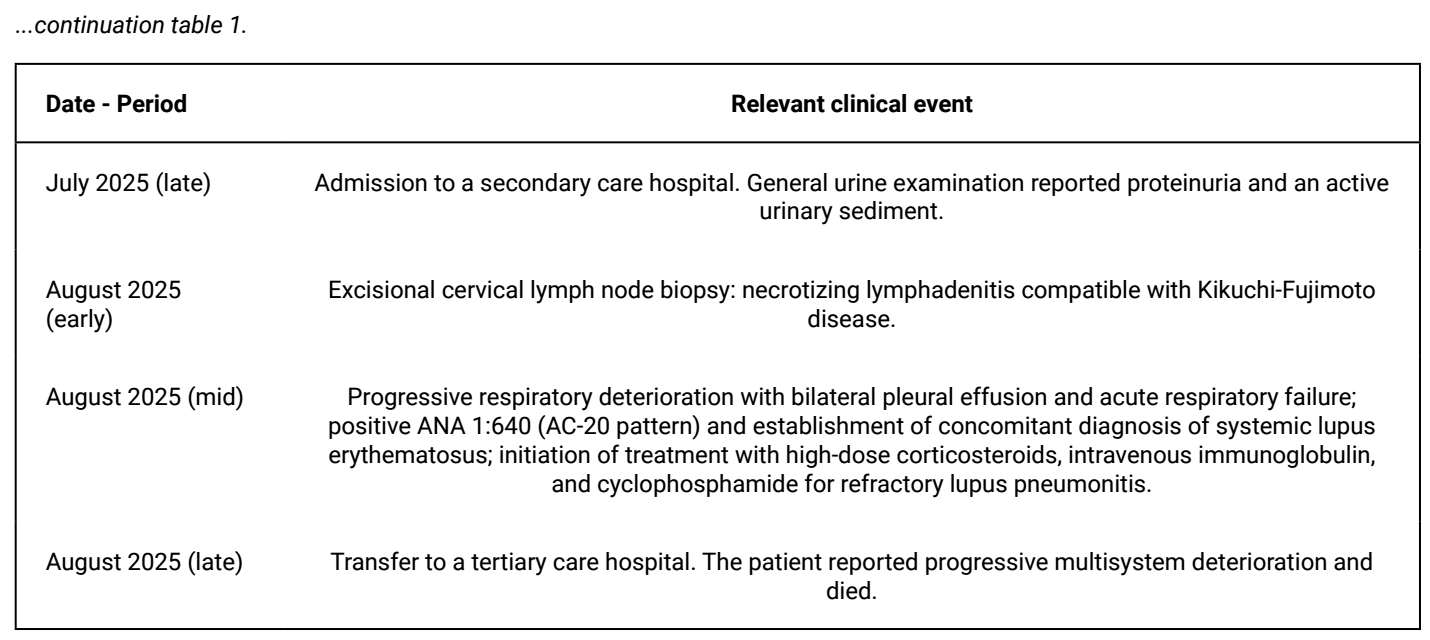
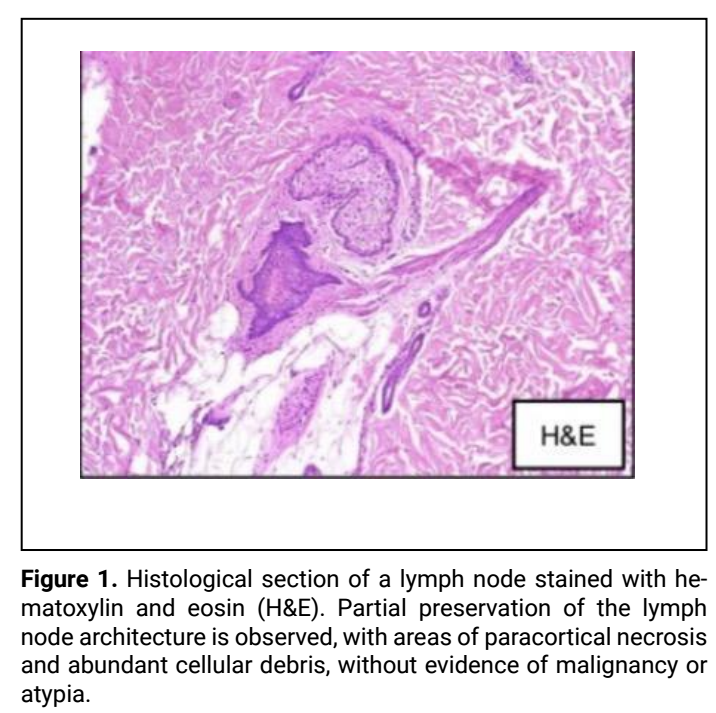
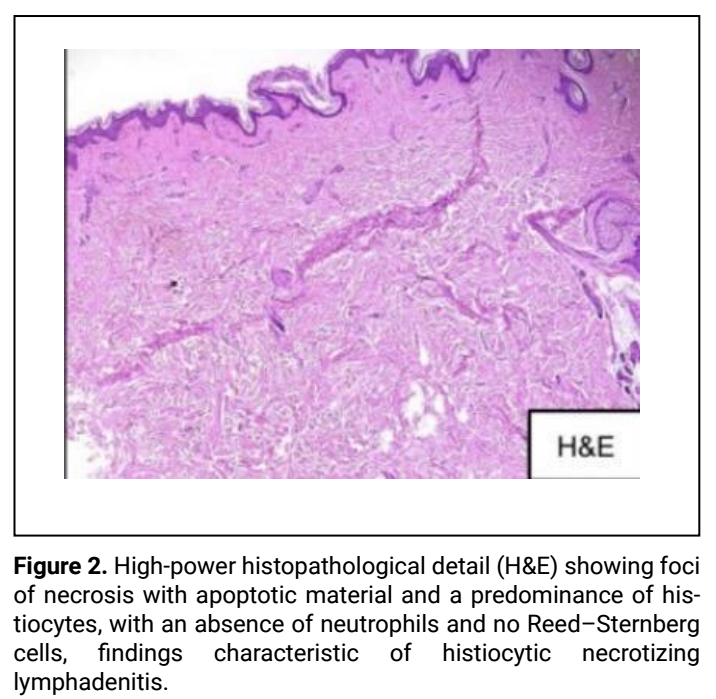
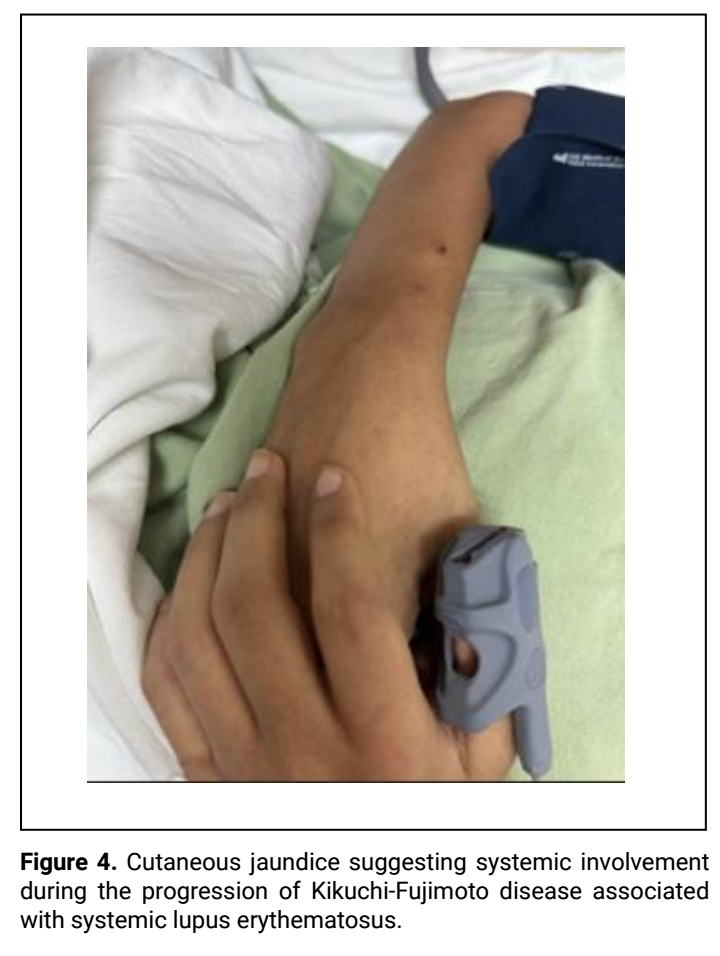
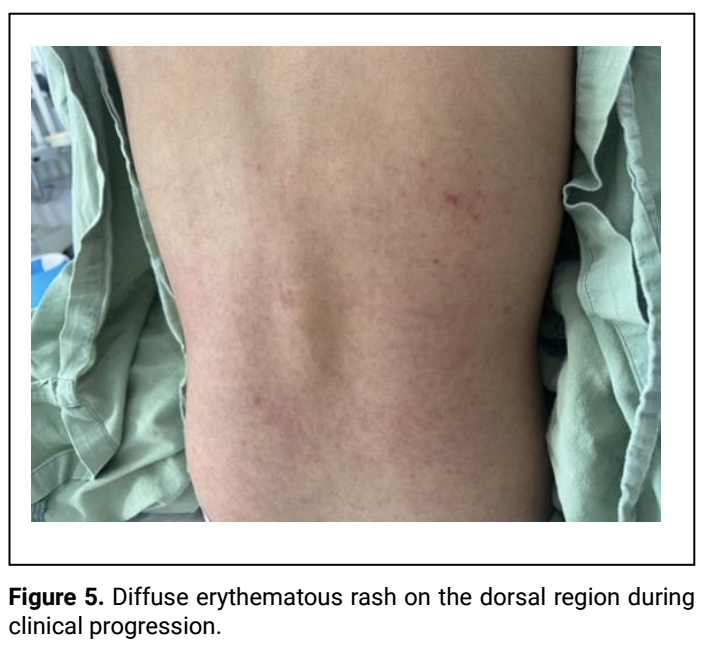
During her hospitalization, the patient presented with oral ulcers, jaundice, a skin rash, and significant elevation of transaminases and direct bilirubin (Figures 4 and 5). She progressed with bilateral pleural effusion, acute respiratory failure, and the need for mechanical ventilation. Positive antinuclear antibodies were documented at a titer of 1:640 (AC-20 pattern), thus meeting the immunological and clinical criteria for systemic lupus erythematosus. Treatment was initiated with high-dose corticosteroids, intravenous immunoglobulin, and subsequently cyclophosphamide for refractory lupus pneumonitis, with initial clinical improvement. The patient was sent to a tertiary care hospital; however, she reported progressive multisystem deterioration and died despite the established treatment.
DISCUSSION
The main contribution of this case lies in the clinical, evolutionary, and histopathological overlap between Kikuchi-Fujimoto disease and systemic lupus erythematosus. The excisional lymph node biopsy showed findings compatible with histiocytic necrotizing lymphadenitis, which initially allowed the diagnosis of Kikuchi-Fujimoto disease to be established and any hematological malignancy to be ruled out. However, the subsequent evolution, with multisystem involvement, positivity for antinuclear antibodies at high titers, and clinical progression, allowed the concomitant diagnosis of systemic lupus erythematosus to be confirmed. Although both diseases can share paracortical necrosis, absence of neutrophils, and an abundant concentration of histiocytes and plasmacytoid dendritic cells, in the patient in this study, no hematoxylin bodies or the Azzopardi phenomenon were documented—findings characteristic of lupus lymphadenitis—which initially supported the diagnosis of Kikuchi-Fujimoto disease over lupus-associated lymphadenitis.1,4
Kikuchi-Fujimoto disease is an exceptional disorder, generally benign and self-limiting, with a worldwide distribution and higher prevalence in Asian populations. It usually affects adolescent and young adult patients, typically with acute onset of painful cervical lymphadenopathy, fever, and constitutional symptoms.1-3 Its clinical spectrum is heterogeneous and is frequently confused with infectious processes, autoimmune diseases, or hematological malignancies, particularly lymphoma, which leads to delays in diagnosis and unnecessary interventions.3,4 Since its initial description in Japan in 1972, it has been documented in various regions of the world, affecting both children and adults, with a clear predominance in women, although in the pediatric population this gender difference may be less marked.5-8
The association between Kikuchi-Fujimoto disease and systemic lupus erythematosus has been widely described and represents one of the main diagnostic challenges of the disease. Lupus may precede, coexist, or develop subsequent to Kikuchi-Fujimoto disease, and some authors consider that certain cases represent manifestations of lupus lymphadenitis rather than isolated Kikuchi-Fujimoto disease.1,4 This distinction is clinically relevant because, while isolated Kikuchi-Fujimoto disease usually resolves spontaneously and responds to supportive treatment or anti-inflammatory drugs, the coexistence with systemic lupus erythematosus implies a higher risk of severe organ involvement and the need for intensive systemic immunosuppression.4 In our case, the progression toward respiratory failure, acute kidney injury, and liver involvement reflected high lupus activity that conditioned a torpid clinical course.
From a histopathological point of view, excisional lymph node biopsy remains the gold standard for establishing the diagnosis. Characteristic findings of Kikuchi-Fujimoto disease include apoptotic debris phagocytized by crescent-shaped macrophages, loss of follicular architecture, and mixed infiltrate of lymphocytes, histiocytes, and immunoblasts, with an absence of neutrophils.1,3 These findings allow it to be differentiated from lymphoma; however, the overlap with systemic lupus erythematosus requires careful interpretation and clinical-serological correlation. In patients with skin or other organ involvement, immunohistochemistry and the clinical context are fundamental to guide the diagnosis.1,4
Regarding clinical manifestations, in addition to lymphadenopathy, up to one-third of patients with Kikuchi-Fujimoto disease suffer from skin alterations: malar rash, erythematous papules, or macules, which increases confusion with systemic lupus erythematosus.1,10 Also, neurological manifestations (aseptic meningitis and encephalitis) and rare but serious complications have also been described, for example, hemophagocytic syndrome, pulmonary hemorrhage, and multiple organ failure.9,11-14 These complications explain the occasional deaths described in the literature, particularly in cases associated with autoimmune diseases.
Recently, cases of Kikuchi-Fujimoto disease associated with SARS-CoV-2 infection or COVID-19 vaccination have been described, supporting the hypothesis of immune activation triggered by viral or vaccine stimuli.15-19
In general, isolated Kikuchi-Fujimoto disease has a benign and self-limiting course (in weeks or months) and a low rate of recurrence. However, when associated with lupus, the prognosis depends on the degree of lupus activity and organ involvement; patients may even require aggressive immunosuppression and close long-term follow-up. Our case illustrates that the Kikuchi-Fujimoto disease–systemic lupus erythematosus overlap can be associated with severe outcomes, reinforcing the need for prolonged clinical surveillance, multidisciplinary care, and a high index of suspicion in patients with persistent fever, lymphadenopathy, and multisystem deterioration.
The limitations of this study are inherent to its nature as a case report, including its retrospective character and reliance on the electronic medical record, as well as the impossibility of performing genetic studies (HLA or exome), which could have provided additional information. However, it shows relevant clinical evidence by highlighting the diagnostic and therapeutic implications of the overlap between Kikuchi-Fujimoto disease and systemic lupus erythematosus in the pediatric population, particularly in public hospitals with limited resources.
CONCLUSIONS
The diagnosis and treatment of patients with Kikuchi-Fujimoto disease require a comprehensive approach and close multidisciplinary collaboration. Although it is considered a benign and self-limiting disease, the course can be complicated and life-threatening when associated with autoimmune diseases, such as systemic lupus erythematosus. In the case presented here, the overlap between Kikuchi-Fujimoto disease and systemic lupus erythematosus was accompanied by a torpid clinical course, with multisystem involvement and death, which underscores the importance of timely recognition of this association.
This report emphasizes the need to maintain a high index of suspicion in patients with persistent fever, lymphadenopathy, and progressive organ deterioration, as well as to perform an exhaustive histopathological and serological evaluation for proper differential diagnosis. Early recognition of the Kikuchi-Fujimoto disease–systemic lupus erythematosus overlap is essential to avoid treatment delays and guide the timely prescription of immunosuppression in severe cases. Prolonged clinical surveillance and close follow-up are decisive for the timely detection of complications and to optimize patient prognosis.
Declaraciones
Author contributions
Alan Orlando Morales Reyes: Data curation; formal analysis; writing—original draft; review and editing. Karla Mitchell Rodríguez García: Data curation; formal analysis; review and editing. Anette Michelle Ávila Silva: Visualization; review and editing. Christian Jair Ramos Gómez: Software; data curation; review and editing.
Conflicts of interest
None of the authors declare any financial, personal, academic, or institutional conflicts of interest.
Informed consent
Informed written consent was obtained from the family member responsible for the patient for the publication of this clinical case and the associated images.
Data confidentiality
The patient’s identity was protected through the anonymization of clinical data. No personal data that would allow for identification are included.
Ethical approval
This case report was reviewed and approved by the corresponding institutional authority of the Hospital of the Institute for Social Security and Services for State Workers (ISSSTE), in accordance with current ethical regulations.
Key references
Mahajan VK, Sharma V, Sharma N, et al. Kikuchi-Fujimoto disease: a comprehensive review. World J Clin Cases. 2023;11(16):3664-3679. doi: 10.12998/wjcc.v11.i16.3664He T, Shen Z, Ling J, et al. Elevated serum IFN-γ and IFN-γ/IL-6 ratio in Kikuchi-Fujimoto disease. Pediatr Rheumatol Online J. 2023;21(1):1-8. doi:10.1186/s12969-023-00805-5Deb A, Fernandez V, Kilinc E, et al. Kikuchi-Fujimoto disease: a case series and review of the literature. Diseases. 2024;12(11):1-10. doi:10.3390/diseases12110290Santana A, Lessa B, Galrão L, et al. Kikuchi-Fujimoto disease associated with systemic lupus erythematosus: case report and review of the literature. Clin Rheumatol. 2005;24(1):60-63. doi:10.1007/s10067-004-0983-9
Permissions
Some figures and tables are original; the rest are adapted from the bibliography used in the article.
Permissions
Some figures and tables are original; the rest are adapted from the bibliography used in the article.
Contribuciones de los autores
Alan Orlando Morales Reyes: Curación de datos; análisis formal; redacción del borrador original; revisión y edición. Karla Mitchell Rodríguez García: Curación de datos; análisis formal; revisión y edición. Anette Michelle Ávila Silva: Visualización; revisión y edición. Christian Jair Ramos Gómez: Software; curación de datos; revisión y edición.
Conflictos de interés
Ninguno de los autores declara tener conflictos de interés financieros, personales, académicos o institucionales.
Consentimiento informado
Se obtuvo consentimiento informado por escrito del familiar responsable de la paciente para la publicación de este caso clínico y de las imágenes asociadas.
Confidencialidad de los datos
Se protegió la identidad de la paciente mediante la anonimización de los datos clínicos. No se incluyen datos personales que permitan su identificación.
Aprobación ética
El presente reporte de caso fue revisado y aprobado por la autoridad institucional correspondiente del Hospital del Instituto de Seguridad y Servicios Sociales de los Trabajadores del Estado (ISSSTE), de acuerdo con la normativa ética vigente.
Referencias clave
Mahajan VK, Sharma V, Sharma N, et al. Kikuchi-Fujimoto disease: a comprehensive review. World J Clin Cases. 2023;11(16):3664-3679. doi: 10.12998/wjcc.v11.i16.3664He T, Shen Z, Ling J, et al. Elevated serum IFN-γ and IFN-γ/IL-6 ratio in Kikuchi-Fujimoto disease. Pediatr Rheumatol Online J. 2023;21(1):1-8. doi:10.1186/s12969-023-00805-5Deb A, Fernandez V, Kilinc E, et al. Kikuchi-Fujimoto disease: a case series and review of the literature. Diseases. 2024;12(11):1-10. doi:10.3390/diseases12110290Santana A, Lessa B, Galrão L, et al. Kikuchi-Fujimoto disease associated with systemic lupus erythematosus: case report and review of the literature. Clin Rheumatol. 2005;24(1):60-63. doi:10.1007/s10067-004-0983-9
Permisos
Algunas figuras y cuadros son originales, el resto, adaptados de la bibliografía utilizada en el artículo.
Permisos
Algunas figuras y cuadros son originales, el resto, adaptados de la bibliografía utilizada en el artículo.
REFERENCIAS
- 1.Mahajan VK, Sharma V, Sharma N, et al. Kikuchi-Fujimoto disease: a comprehensive review. World J Clin Cases. 2023; 11 (16): 3664-3679. doi: 10.12998/wjcc.v11.i16.3664
- 2.He T, Shen Z, Ling J, et al. Elevated serum IFN-γ and IFN-γ/IL-6 ratio in Kikuchi-Fujimoto disease. Pediatr Rheumatol Online J. 2023; 21 (1): 1-8. doi: 10.1186/s12969-023-00805-5
- 3.Deb A, Fernandez V, Kilinc E, et al. Kikuchi-Fujimoto disease: a case series and review of the literature. Diseases. 2024; 12 (11): 1-10. doi: 10.3390/diseases12110290
- 4.Rodríguez-Ferreras A, Maray I, Coya-Fernández C, et al. Kikuchi-Fujimoto disease and COVID-19 vaccination: a pharmacovigilance approach. Eur Ann Allergy Clin Immunol. 2023; 55 (6): 278-282. doi: 10.23822/EurAnnACI.1764-1489.260
- 5.Ahmed Z, Quadir H, Hakobyan K, et al. Kikuchi-Fujimoto disease: a rare cause of cervical lymphadenopathy. Cureus. 2021; 13 (8): e17021. doi:10.7759/cureus.17021
- 6.Mohamad M, Khan AA, Alanazi A, et al. Kikuchi-Fujimoto disease: review of 11 cases diagnosed over 10 years at a tertiary care hospital in Doha, Qatar. Eur J Case Rep Intern Med. 2020; 7 (6): 001598. doi: 10.12890/2020_001598
- 7.Ruano-Aguilar JM, Cordero-Bello R, Guerrero-Hernández M, et al. Enfermedad de Kikuchi-Fujimoto. Acta Med Grupo Angeles. 2024; 22 (3): 242-243.
- 8.Wang Y, Chen C, Xie J, et al. Kikuchi-Fujimoto disease and membranous nephropathy. Int Urol Nephrol. 2023; 55 (11): 3001-3002. doi: 10.1007/s11255-023-03540-7
- 9.Iwamoto N, Funahashi M, Shinohara K, et al. Two cases of Kikuchi disease presenting with aseptic meningitis and encephalitis. Intern Med. 2022; 61 (17): 2687-2689. doi: 10.2169/internalmedicine.8935-21
- 10.Fujita Y, Kurasawa K, Kuwashima S, et al. Polyarthritis associated with Kikuchi-Fujimoto disease in a child. Indian J Pediatr. 2023; 90 (2): 199. doi: 10.1007/s12098-022-04359-7
- 11.Liu B, Sun Y, Hu B, et al. Kikuchi-Fujimoto disease concurrent with aseptic meningitis or encephalitis in children: a case-control study. BMC Pediatr. 2025; 25 (1): 1-9. doi: 10.1186/s12887-025-04677-1
- 12.Shen Z, Ling J, Zhu X, et al. Macrophage activation syndrome in children with Kikuchi-Fujimoto disease. Pediatr Rheumatol Online J. 2023; 21 (1): 1-8. doi: 10.1186/s12969-023-00783-8
- 13.Huang Y, Wang X, Wang L, et al. Kikuchi-Fujimoto disease associated with the central nervous system in children. Pediatr Discov. 2023; 1 (2): e23. doi: 10.1002/pdi2.23
- 14.Liu C, Jin Y, Huang H, et al. Kikuchi-Fujimoto disease as the initial manifestation of systemic lupus erythematosus complicated with macrophage activation syndrome: two case reports and review of the literature. BMC Pediatr. 2022; 22 (1): 1-8. doi:10.1186/s12887-022-03464-7
- 15.Racette SD, Alexiev BA, Angarone MP, et al. Kikuchi-Fujimoto disease presenting in a patient with SARS-CoV-2 infection: a case report. BMC Infect Dis. 2021; 21 (1): 1-6. doi: 10.1186/s12879-021-06550-1
- 16.Yamada R, Komohara Y, Yoshii H, et al. Kikuchi-Fujimoto disease following COVID-19 in a 32-year-old woman. J Clin Exp Hematop. 2023; 63 (3): 209-211. doi: 10.3960/jslrt.23009
- 17.Lencastre-Monteiro R, Cabaço S, Soares L, et al. Kikuchi-Fujimoto disease: a case of SARS-CoV-2 infection triggering the rare disease. Cureus. 2023; 15 (3): e35858. doi: 10.7759/cureus.35858
- 18.Kumar A, Aggarwal V, Sharma S, et al. Kikuchi-Fujimoto disease and post-SARS-CoV-2 association. Indian J Pediatr. 2023; 90 (2): 208. doi: 10.1007/s12098-022-04365-9
- 19.Santana A, Lessa B, Galrão L, et al. Kikuchi-Fujimoto disease associated with systemic lupus erythematosus: case report and review of the literature. Clin Rheumatol. 2005; 24 (1): 60-63. doi: 10.1007/s10067-004-0983-9