OBJECTIVE:
Identify the main tree species of the Guadalajara Metropolitan Area and their relationship with allergies.
METHODS:
Observational, cross-sectional and descriptive study, carried out with the intention of identifying the trees. An inventory of the most frequent trees from the AMG urban tree database was carried out and the species with the highest relationship to allergic diseases were identified.
RESULTS:
A total of 49,138 trees were identified; the most common species were the Ficus, Orange Tree, Palm, Cypress, Guava and Ash. Of the 15 most common species, Cypress, Ash, Casuarina, Eucalyptus, and Thunder are of greater allergology relevance.
CONCLUSIONS:
Due to the increase in allergic diseases, such as allergy to tree pollen, it is important to have inventories that identify the species that may be related to these conditions, both for allergists and health authorities.
OBJETIVO:
Identificar las principales especies de árboles del Área Metropolitana de Guadalajara y su relación con las alergias.
MÉTODOS:
Estudio observacional, transversal y descriptivo, llevado a cabo con la intención de identificar el arbolado del Área Metropolitana de Guadalajara. Se realizó un inventario de los árboles más frecuentes de la base de datos del arbolado urbano del Área Metropolitana de Guadalajara y se identificaron las especies frecuentemente con enfermedades alérgicas.
RESULTADOS:
Se identificaron 49,138 árboles y las especies más comunes fueron: Ficus, Naranjo, Palma, Ciprés, Guayaba y Fresno. De las 15 especies más frecuentes, el Ciprés, Fresno, Casuarina, Eucalipto y Trueno tuvieron mayor relevancia alergológica.
CONCLUSIONES:
Debido al aumento de las enfermedades alérgicas, por ejemplo, la alergia al polen de árboles, es importante contar con inventarios que identifiquen las especies relacionadas con estos padecimientos, tanto para los alergólogos como para las autoridades de salud.
BACKGROUND
The expansion of cities is increasingly greater due to the increase in the percentage of people living in urban areas compared to rural areas, which generates challenges in the planning of services, environments, and health.1 Cities with a greater amount of green areas offer a better quality of life due to their benefits to the urban ecosystem, such as the reduction of heat islands and noise, hosting biodiversity, among others.2-4 The Food and Agriculture Organization of the United Nations (FAO) has a program called “Tree Cities of the World,” which recognizes and encourages the creation and maintenance of urban forests,5 and among the recognized cities are Guadalajara, Zapopan, and Tlajomulco de Zúñiga, in Jalisco, Mexico.
The Guadalajara Metropolitan Area is made up of nine municipalities: El Salto, Guadalajara, Ixtlahuacán de los Membrillos, Juanacatlán, Tlajomulco de Zúñiga, Tlaquepaque, Tonalá, Zapopan, and Zapotlanejo, with a territorial extension of 3,265 km2.2 In 2020, a population of 5,268,642 inhabitants was counted, located in the Valley of the Santiago River basin, in the Atemajac Valley and the Tonalá plain. The Guadalajara Metropolitan Area includes 14 protected natural areas and 13 urban forests.6
In urban areas, trees represent the largest source of the total airborne pollen to which the population is exposed.7 Pollen, from the Latin pollen (flour, dust), is one of the main allergens causing exacerbations of allergic diseases: asthma or rhinitis.
The increase in the prevalence of allergic diseases is a phenomenon occurring at both global and local levels.8,9 In recent years, an increase in the prevalence of asthma has been identified in Guadalajara,9 and a high prevalence of atopy (genetic tendency to develop allergic diseases) has even been documented in the Metropolitan Area population, especially to tree pollen.10,11
Although the origin of allergic diseases is multifactorial, it has a strong hereditary component, and various studies indicate that its contribution varies from 30 to 80%,12 which shows that the increase in its prevalence is also due to other factors, such as the environment.
In the Guadalajara Metropolitan Area, public policy is directed towards strengthening programs that promote urban forestry; additionally, there are private initiatives, such as the Bosque Urbano de Extra A.C., which aims to make the Guadalajara Metropolitan Area the most forested in the country, with the goal of planting 5 million trees in the next 10 years.13
At the same time, there is also a growth in the size of the urban area and, within it, a greater density of buildings that concentrate materials such as asphalt, concrete, steel, and glass that hinder temperature dissipation and generate heat islands, affecting the microclimate of specific zones of the Guadalajara Metropolitan Area. This temperature increase is associated with meteorological phenomena: heat waves, intense rains, floods, and hailstorms.14 Consequently, climate change can alter pollination patterns, generate an increase in pollen production, and increase its allergenic properties.15
The objective of this study was: to identify the main tree species in the Guadalajara Metropolitan Area and their relationship with allergies.
METHODS
Observational, cross-sectional, and descriptive study, carried out with the intention of identifying the trees of the Guadalajara Metropolitan Area. The census developed by the Metropolitan Planning Institute (IMEPLAN) was used, a public body dedicated to planning, managing, and coordinating projects and instruments for metropolitan development with the support of the municipalities of the Guadalajara Metropolitan Area and the state government of Jalisco.16
The census was created from satellite images available through QGIS® and Google Earth® from which tree crowns were identified, considering the criteria: shape, size, texture, and projected shadow, which allowed individual specimens to be distinguished within the urban environment. Using the Street View® tool, it was verified that the identified crowns corresponded to the morphometric characteristics of a tree and, once confirmed, a georeferenced point was digitized at the base of the trunk to register its precise location. The absence of duplicates was verified and the census of the nine municipalities of the AMG was integrated. Estimates were made of the number of trees by municipality, tree density per hectare and neighborhood. Finally, the collection of taxonomic, dasometric, urbanistic, and phytosanitary data was validated in the field.2
With the publicly available census database, a data sheet was prepared with the Excel® program. Quantification by families and genera of the total trees in the Guadalajara Metropolitan Area was carried out. From the list of most frequent tree species, a subclassification was made of the species with the greatest allergenic potential, both due to the presence of allergens recognized by the World Health Organization and the International Union of Immunological Societies (WHO/IUIS),17 and due to their known allergenicity. Similarly, a list was prepared of the main tree species of the 13 urban forests of the AMG.
RESULTS
The most recent urban tree census, conducted in 2022, included 49,138 trees identified by botanical family, genus, scientific name, and common name; in addition, other variables such as coordinate location, municipality where it is located, whether it is classified as a native, exotic, or invasive species, and its endemism are reported. With this sampling, it was estimated, using inferential statistics, that the total number of trees in the Guadalajara Metropolitan Area was 1,379,306 trees.
A total of 192 different tree genera were identified in the urban tree inventory of the Guadalajara Metropolitan Area, and among the most frequent were: Ficus, Sour Orange, Palm, Cypress, Guava, and Ash. The most common tree families were: Oleaceae, Cupressaceae and Myrtaceae. From the list of the most frequent trees, only 4 species were considered native (Guava, Ash, Manila Tamarind, and Black Olive) and the rest, exotic species; in the case of Casuarina, Eucalyptus, and Thunder, they are considered invasive exotic species. Table 1
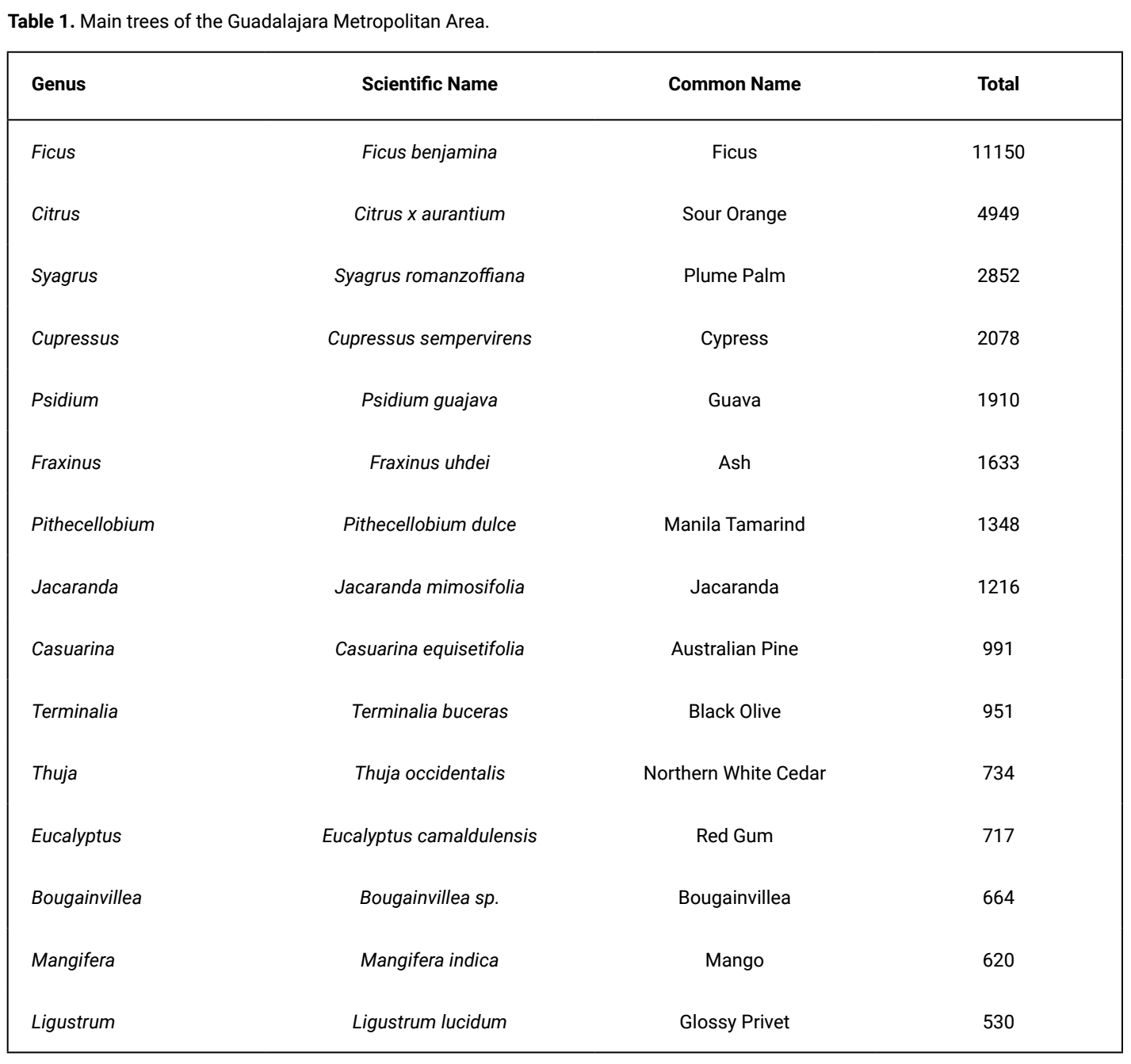
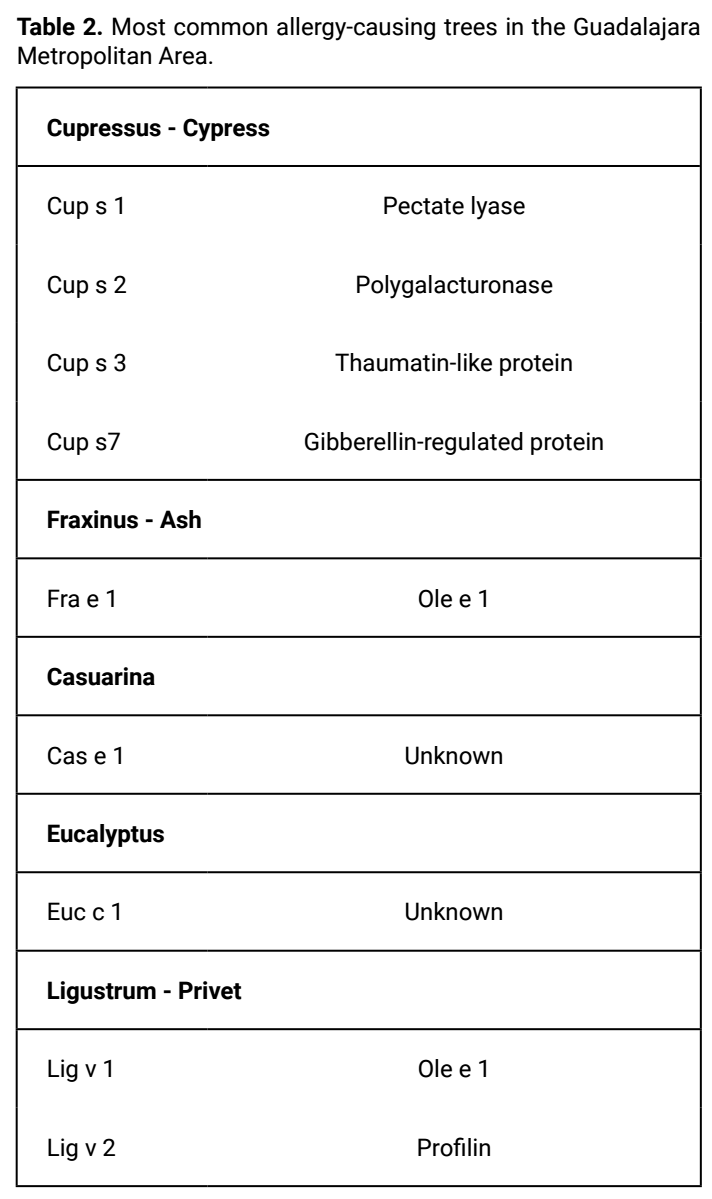
Of the 15 most common trees, 5 genera were reported to have greater interest for the development of allergic diseases, as they have allergens recognized by the WHO/IUIS, for example: Cypress, Ash, Casuarina, Eucalyptus, and Thunder.
The rest of the trees, although they can cause allergies to their pollen, are a less frequent cause, in addition to not having recognized allergens. The sour orange (Citrus x aurantium) does not show allergens recognized by the WHO/IUIS, unlike other genera of the same family, such as Citrus limon (lemon tree), Citrus reticulata (mandarin) and Citrus sinensis (sweet orange), which do have specified allergens.
In Table 2 the 5 most common allergy-causing trees in the Guadalajara Metropolitan Area are listed, in addition to the proteins known or proposed as allergens by the WHO/IUIS allergen nomenclature subcommittee.
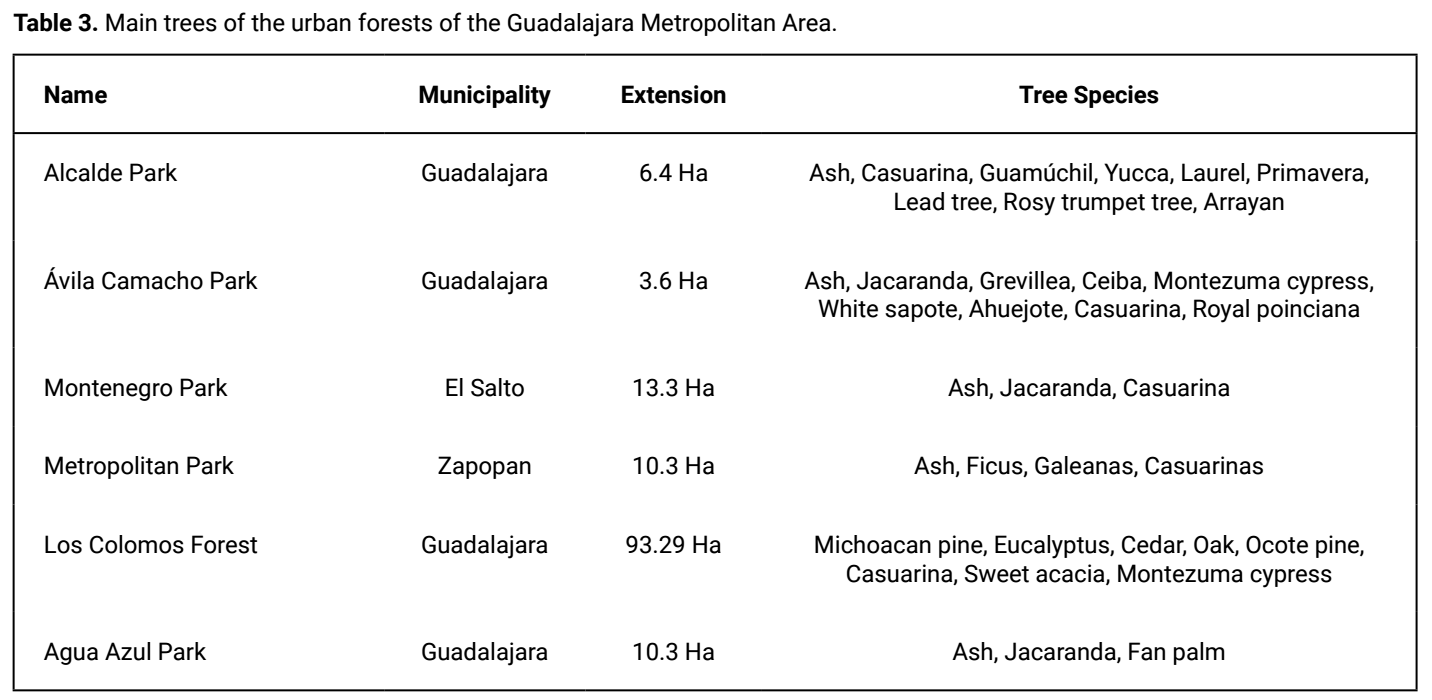
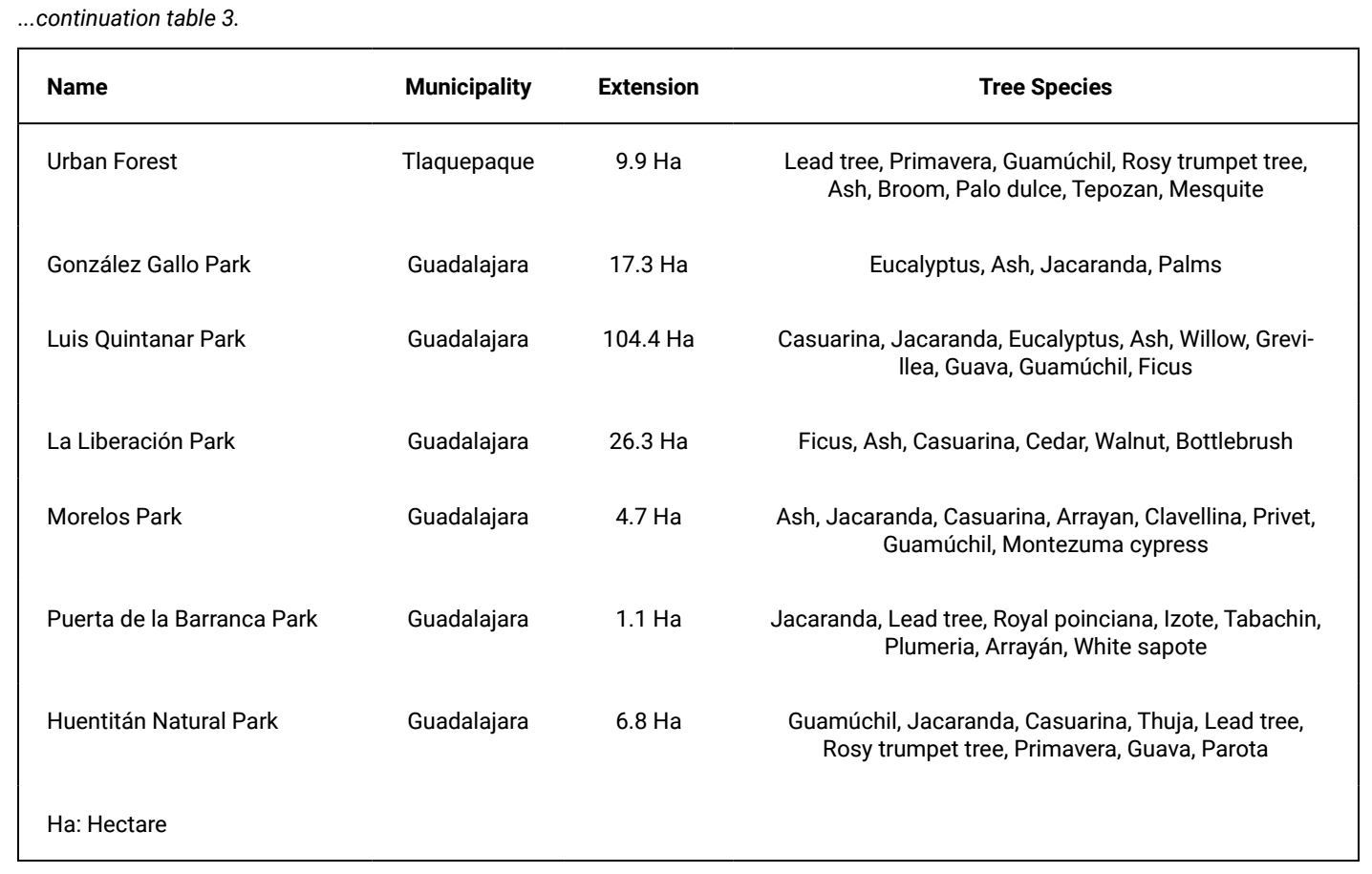
Of the 13 urban forests located in the Guadalajara Metropolitan Area, there is no inventory specifying which tree species are present. From the urban tree census, they were not taken as part of the sampling because these blocks are found in only 4 municipalities, 10 of which are in the municipality of Guadalajara; however, there are estimates of the main tree species in these urban forests. In Table 3 the characteristics of location, extension, and main species are shown, information obtained from the urban forests website of the Guadalajara Metropolitan Area.18
DISCUSSION
There are studies evaluating urban trees in specific areas of the Guadalajara Metropolitan Area, such as that of Gómez-Vega et al. 2024,19 which characterized the urban trees of a linear green area (median strip of Acueducto Avenue) between Guadalajara and Zapopan, where a total of 897 trees were registered and the most abundant species were: Syagrus romanzoffiana (queen palm) 19.62%, Pinus greggii 10.81%, Platanus mexicana 10.26% and Pithecellobium dulce K (Manila Tamarind) 9.3%, which in the census reported in the present study include the palm and the manila tamarind among the most frequent; the genera Pinus and Platanus were also identified, where 414 and 42 specimens were counted, respectively.
Macías-Muro et al. 202220 evaluated the health of urban trees in the Guadalajara Metropolitan Area through satellite images, identifying 950 trees, whose most frequent species were Ash (n = 235), Casuarina (n = 202), Ficus (n = 143), Jacaranda (n = 129), Eucalyptus (n = 109), and Palm (n = 100), which are found in the present report as part of the most frequent species.
Hernández-Tovar et al. 202121 conducted an inventory model for the management of urban trees in a neighborhood of Guadalajara (Chapultepec Country), performing a census that included 1,386 trees; they recorded 81 species belonging to 32 families, with the most abundant trees being Ficus (Ficus benjamina) with 326 individuals (23.52%), Thuja (Thuja orientalis) with 117 individuals (8.44%), Queen palm (Arecastrum romanzoffianum) with 107 individuals (7.72%), Sour orange (Citrus aurantium) with 101 individuals (7.28%) and Italian cypress (Cupressus sempervirens) with 74 individuals (3.39%) with a cumulative total of 698 trees representing 50% of the total census, all of these being part of the most frequent trees found in the present study.
Although there is agreement with the types of most frequent species in the previously cited studies, no studies are found that report the main species of the Guadalajara Metropolitan Area or that have this quantity of registered trees. It is important to mention that, according to the estimates from the data in the present study, there is approximately 1 tree for every 4 inhabitants in the Guadalajara Metropolitan Area.
Regarding the fact that most trees are of exotic origin, it may be because tree species are preferred for their appearance to favor the ornamentation and landscaping of the environment; however, the use of native species has the advantage of ecological adaptation and resistance to the environment.
Green areas and urban trees are important factors for the well-being of the population; they encourage physical activity, reduce stress, anxiety, and depression. In addition, they are meeting and recreation points that strengthen social cohesion, increase the perception of safety, and the sense of belonging.22,23 However, for all the benefits they generate, they can also be a determinant for causing allergic diseases, which in conjunction with other components, such as genetic predisposition to atopy or climate change, can be associated so that allergic conditions are increasingly frequent. In Figure 1 the aforementioned factors are reported.
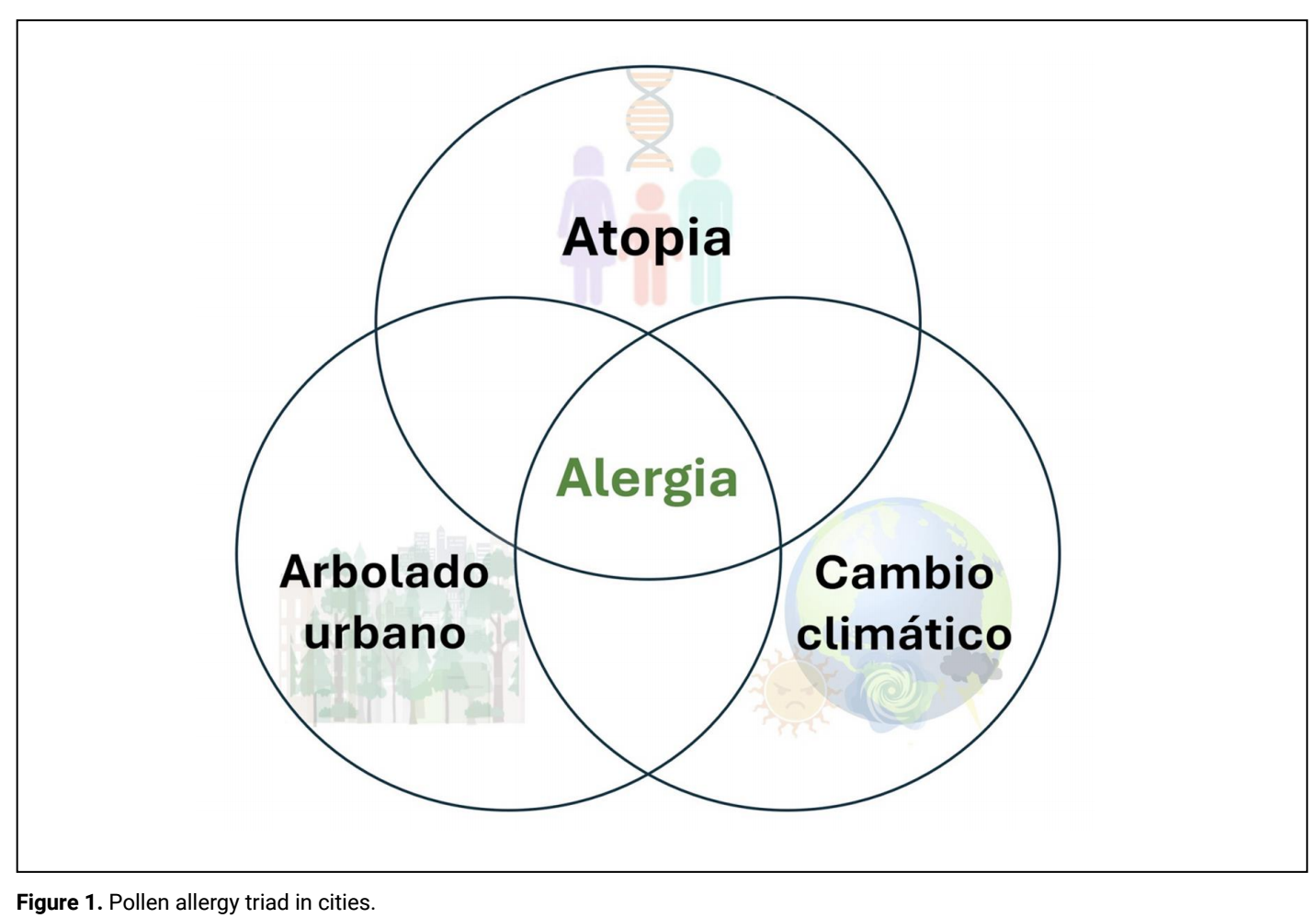
There are studies that identify green areas as triggers of respiratory symptoms in urban settings, unlike their exposure in rural environments,24,25 a hypothesis for this difference is that environmental pollution is related to the increase in the prevalence of allergic diseases in two main ways: first, by increasing the allergenicity of pollen,26,27 and second, through the inflammation that polluting particles can produce, by themselves, in the respiratory tract,28 therefore, the beneficial effects of green areas and urban trees are greater in cities with little air pollution and population density.
In this sense, it can be proposed as a possibility that respiratory allergies will continue to increase in the population of the Guadalajara Metropolitan Area, so it is important to know which are the most common tree species and their characteristics, both for the allergist who treats patients with this type of disease and for governments, in order to guide public health policies.
Study limitations
The central axis of this work was to publicize the main species that make up the urban trees of the Guadalajara Metropolitan Area; however, due to the nature of the descriptive study, it was not possible to make causal implications.
The proposal of the association between urban trees, especially species with potential allergenic implication, and the effects of climate change with respiratory allergies cannot be affirmed with the evidence presented in this research, but it is important to mention that said hypothesis is valuable to be considered with caution.
CONCLUSIONS
Due to the increase in allergic diseases, such as allergy to tree pollen, it is important to have inventories that identify the species that may be related to these conditions, both for allergists and health authorities.
Declaraciones
Author contribution
The author carried out the entire preparation of this manuscript.
Conflict of interest
The author declares no conflict of interest.
Funding
This article received no funding.
Human and animal rights declaration
This article does not report studies conducted on humans or animals.
Key references D’Amato G, D’Amato M. Climate change, air pollution, pollen allergy and extreme atmospheric events. Curr Opin Pediatr 2023; Publish Ahead of Print.Fuertes E, Markevych I, von Berg A, Bauer CP, et al. Greenness and allergies: evidence of differential associations in two areas in Germany. J Epidemiol Commun Health 2014; 68 (8): 787-90.D’Amato G, Liccardi G, D’Amato M. Environmental risk factors (outdoor air pollution and climatic changes) and increased trend of respiratory allergy. J Invest Allergol Clin Immunol 2000; 10 (3): 123-8. https://pubmed.ncbi.nlm.nih.gov/10923585/
Permissions
All figures and tables are original.
Permissions
All figures and tables are original.
Contribución de los autores
El autor llevó a cabo toda la elaboración del presente manuscrito.
Conflicto de interés
El autor declara no tener conflicto de interés.
Financiamiento
Este artículo no recibió ningún financiamiento.
Declaración de derechos humanos y de los animales
Este artículo no reporta estudios realizados en seres humanos ni en animales.
Referencias clave D’Amato G, D’Amato M. Climate change, air pollution, pollen allergy and extreme atmospheric events. Curr Opin Pediatr 2023; Publish Ahead of Print.Fuertes E, Markevych I, von Berg A, Bauer CP, et al. Greenness and allergies: evidence of differential associations in two areas in Germany. J Epidemiol Commun Health 2014; 68 (8): 787-90.D’Amato G, Liccardi G, D’Amato M. Environmental risk factors (outdoor air pollution and climatic changes) and increased trend of respiratory allergy. J Invest Allergol Clin Immunol 2000; 10 (3): 123-8. https://pubmed.ncbi.nlm.nih.gov/10923585/
Permisos
Todas las figuras y tablas son originales.
Permisos
Todas las figuras y tablas son originales.
REFERENCIAS
- 1.Sandoval TC, Magaña O, Lizette S, Alberto J. La vegetación como reguladora del clima urbano: el caso del Área Metropolitana de Guadalajara, Jalisco, México. Investigaciones Geográficas Boletín del Instituto de Geografía. 2024 14; (114). https://www.investigacionesgeograficas.unam.mx/index.php/rig/article/view/60849
- 2.Instituto de Planeación y Gestión del Desarrollo del Área Metropolitana de Guadalajara - Imeplan, (2025). Diagnóstico de arbolado urbano y áreas verdes públicas del Área Metropolitana de Guadalajara 2022. Zapopan, Jalisco, México.
- 3.Giannico V, Spano G, Elia M, D’Este M, et al. Green spaces, quality of life, and citizen perception in European cities. Envirom Res 2021; 196: 110922.
- 4.World Health Organisation. Urban green spaces and health. iriswhoint. 2016; Disponible en: https://iris.who.int/handle/10665/345751
- 5.Tree Cities of the World [Internet]. Treecitiesoftheworld.org. 2024. https://www.treecitiesoftheworld.org/
- 6.Plan de Acción Climática del Área Metropolitana de Guadalajara. https://pimus.imeplan.mx/downloads/PACmetro.pdf
- 7.A RT, J AC, Canales M, Raul, P PM, Leiva MA. Trends and threshold exceedances analysis of airborne pollen concentrations in Metropolitan Santiago Chile. PLoS ONE 2015; 10 (5): e0123077-7.
- 8.Le PN, Adachi Y, Anastasiou E, Ansotegui IJ, et al. Global change, climate change, and asthma in children: Direct and indirect effects - A WAO Pediatric Asthma Committee Report. World Allergy Org J 2024; 17 (11): 100988-8.
- 9.Morales-Romero J, Bedolla-Barajas M, López-Cota GA, Bedolla-Pulido TI, et al. Tendencia de la prevalencia de asma y sus síntomas en los adolescentes tardíos mexicanos en un periodo de siete años. Rev Alergia Méx 2018; 65 (4): 331-40. https://www.scielo.org.mx/scielo.php?pid=S2448-91902018000400331&script=sci_abstract&tlng=en
- 10.Bedolla-Barajas M, Hernández-Colín DD, Sainz-Hernández J, Morales-Romero J. Sensibilización a alergenos en adultos mexicanos con asma; la experiencia en un hospital escuela. Rev Alergia Méx 2011; 58 (3): 133-41. https://www.elsevier.es/es-revista-revista-alergia-mexico-336-articulo-sensibilizacion-alergenos-adultos-mexicanos-con-X0002515111345108
- 11.Contopoulos-Ioannidis DG, Kouri IN, Ioannidis JPA. Genetic Predisposition to Asthma and Atopy. Respiration 2005; 74 (1): 8-12.
- 12.Lawson LP, Parameswaran S, Panganiban RA, Constantine GM, et al. Update on the genetics of allergic diseases. J Allergy Clin Immunol 2025. https://www.jacionline.org/article/S0091-6749(25)00327-6/fulltext
- 13.Nosotros – Bosque Urbano. Bosqueurbanoextra.org.mx. 2022. https://bosqueurbanoextra.org.mx/nosotros/
- 14.Davydova Belitskaya V. http://www.saludambiental.udg.mx/descargas/la-gestion-climatica-en-Jalisco.pdf
- 15.D’Amato G, D’Amato M. Climate change, air pollution, pollen allergy and extreme atmospheric events. Curr Opin Pediatr 2023; Publish Ahead of Print.
- 16.Zoom Metropolitano. Imeplan.mx. https://zoom.imeplan.mx
- 17.WHO/IUIS Allergen Nomenclature Home Page. www.allergen.org. https://www.allergen.org/
- 18.Inicio - Bosques urbanos [Internet]. Bosques urbanos. 2026. https://bosquesamg.mx/
- 19.Gómez-Vega ER, Hernández-Tovar MA, Santiago-Pérez AL, Rodríguez-Ramírez CG, et al. Evaluación del arbolado urbano y sus servicios ambientales en el Área Metropolitana de Guadalajara (AMG). e-CUCBA 2024; 22 (11): 01-9.
- 20.Macías-Muro A, Martínez-Trinidad T, Valdez-Lazalde JR, Romero-Sánchez ME, et al. Evaluación de la salud del arbolado urbano a través de imágenes satelitales en Guadalajara, México. Entreciencias: Diálogos en la Sociedad del Conocimiento. 2022; 10 (24).
- 21.Hernández Tovar MA, Hernández-Álvarez E, Gallegos Rodríguez A, Guzmán Paredes CM, et al. Modelo de inventario para el manejo del arbolado urbano empleando un sistema de información geográfica. e-CUCBA. 2021; 9 (17): 211-21.
- 22.Shortt NK, Rind E, Pearce J, Mitchell R. Integrating Environmental Justice and Socioecological Models of Health to Understand Population-Level Physical Activity. Environment and Planning A: Econ Space. 2014; 46 (6): 1479-95.
- 23.Guarda-Saavedra P, María Teresa Muñoz-Quezada, Cortínez-O’Ryan A, Nicolás Aguilar-Farías, et al. Beneficios de los espacios verdes y actividad física en el bienestar y salud de las personas. Rev Med Chile 2022; 150 (8): 1095-107.
- 24.Keddem S, Barg FK, Glanz K, Jackson T, et al. Mapping the urban asthma experience: Using qualitative GIS to understand contextual factors affecting asthma control. Soc Sci Med 2015; 140: 9-17. https://www.sciencedirect.com/science/article/abs/pii/S0277953615300162
- 25.Fuertes E, Markevych I, von Berg A, Bauer CP, et al. Greenness and allergies: evidence of differential associations in two areas in Germany. J Epidemiol Commun Health 2014; 68 (8): 787-90.
- 26.Ghiani A, Aina R, Asero R, Bellotto E, et al. Ragweed pollen collected along high-traffic roads shows a higher allergenicity than pollen sampled in vegetated areas. Allergy 2012; 67 (7): 887-94.
- 27.Sedghy F, Sankian M, Moghadam M, Ghasemi Z, et al. Impact of traffic-related air pollution on the expression of Platanus orientalis pollen allergens. Int J Biometeorol 2016; 61 (1): 1-9.
- 28.D’Amato G, Liccardi G, D’Amato M. Environmental risk factors (outdoor air pollution and climatic changes) and increased trend of respiratory allergy. J Invest Allergol Clin Immunol 2000; 10 (3): 123-8. https://pubmed.ncbi.nlm.nih.gov/10923585/